
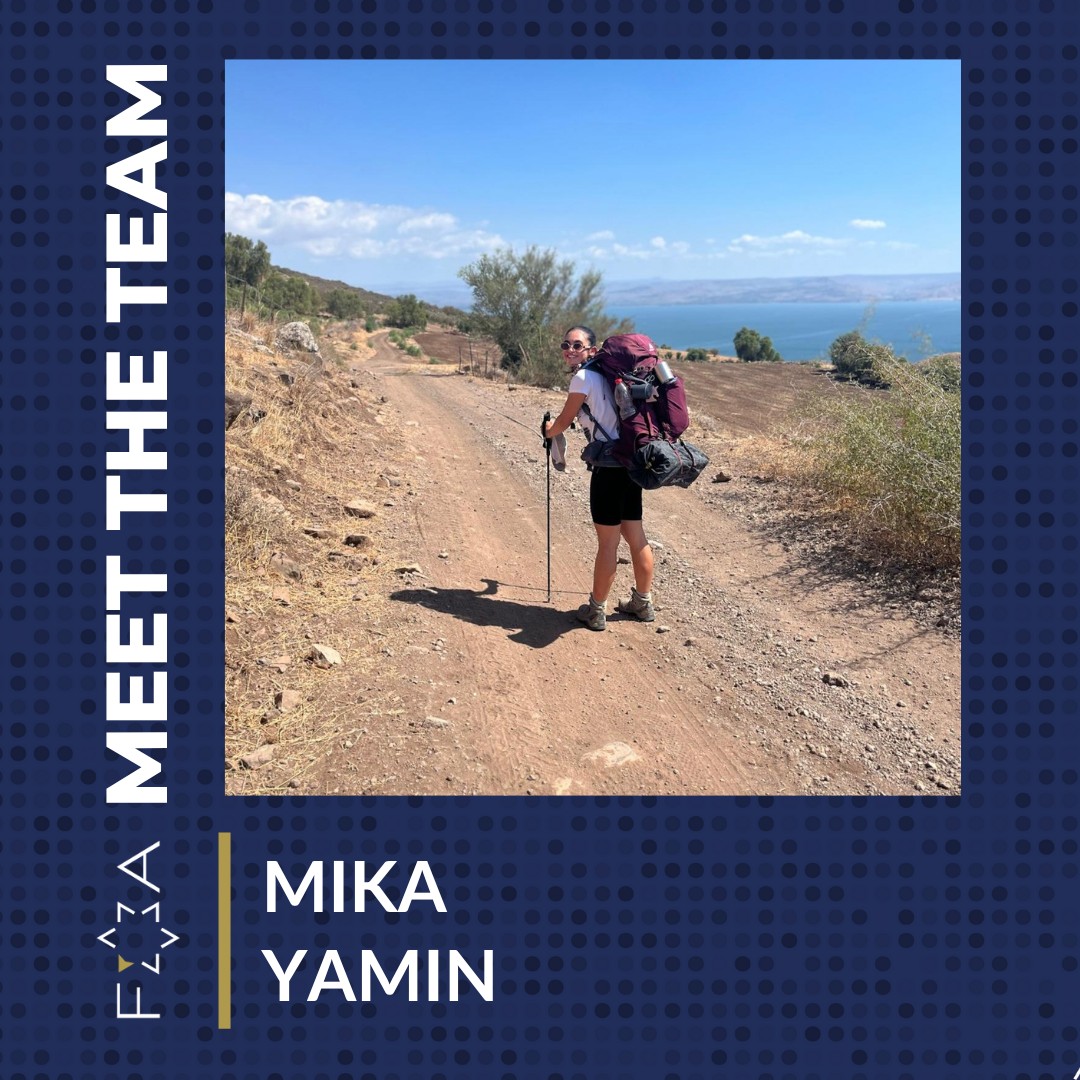
Please share a bit about yourself and what led you to where you are today.
I’m Mika Yamin, a Data Engineering student at Ben-Gurion University. I’ve always had a passion for computers and technical things.
How did you first hear about Fighting Online Antisemitism, and what made you decide to get involved?
Actually, I found it just by Googling. I told myself that I wanted to volunteer for something this year — something meaningful and important to me, and also something that involved working on a computer. So I searched a lot, and finally, I found it. I think social media has both good and bad sides, and we need to do as much as we can to protect the name of Israel and the Jewish people.
What does your day-to-day work as a volunteer on the monitoring team look like?
I’m a student, so most of the day I study. I set aside time in my schedule two times a week to monitor, plus one hour for the weekly Zoom meeting we have.
What motivates you personally to dedicate time and energy to reporting antisemitic content online?
What motivates me most is knowing that my small actions really make a difference. Every post I report or document can help stop the spread of hate and lies.
Coming from your background, what unique perspective do you bring to the fight against antisemitism and anti-Zionist hate?
As both a student and a soldier, I bring a personal understanding of how online hate affects real people. I see how fake news and antisemitic posts can quickly change opinions and spread hate. My background helps me recognize how these things impact both individuals and society, and it motivates me to take action instead of staying silent.
Before joining FOA, how familiar were you with antisemitism and the ways it spreads online?
Before joining, I knew antisemitism existed, but I didn’t realize how widespread it is and how organized it can be. I thought it was just about open hate speech, but now I see that it often manifests as calls for violence. I’m shocked by the amount of fake news and by how poorly we are unfortunately portrayed on social media.
Since joining, what has surprised you most about the patterns of hate you encounter online?
The sheer amount of fake news and calls for death. I also didn’t know before how many posts there are these days about Hitler.
What is the most difficult part of this work for you, and how do you cope with it?
As a soldier, the most difficult thing is seeing how much hate there is directed toward the IDF, and how people post the faces and names of soldiers and celebrate when one dies.
What do you hope will change in the online space in the coming years when it to antisemitism and hate speech?
I hope social media platforms will take stronger and faster action against hate speech. I also hope that education about antisemitism becomes more common so people can recognize it when they see it. Mostly, I want the internet to be a place where people feel safe to express themselves without fear or hate.
What message would you like to share with other people — from any background — about why this work matters and how they can take part?
I believe this work matters for everyone, not just for Jews. Hate online affects all of us. If we stay silent, it only grows stronger. My message is: don’t ignore it. Report, speak up, and use your voice for good. Each person can make a difference — and together we can create a more respectful and honest online world.